The Next Great Crisis
Greenland and the Fate of NATO

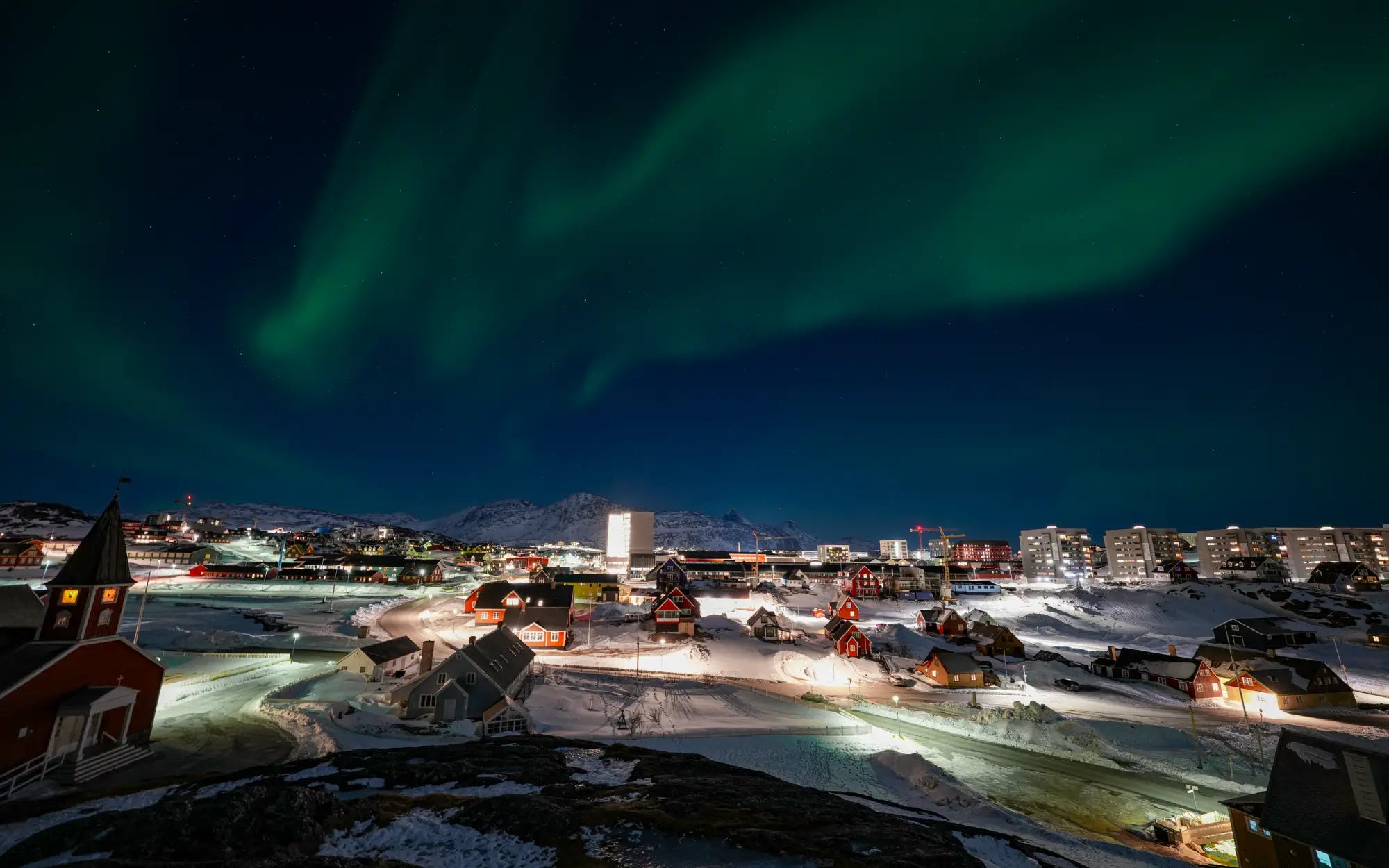
Nuuk, Greenland
Emboldened by the successful military operation to seize Maduro, the Trump Administration has wasted no time in reminding the world of its priorities. After Venezuela: Cuba, Colombia, Mexico, and Greenland.
Flowing from what the National Security Strategy (NSS) has dubbed the “Trump Corollary”1 to the Monroe Doctrine, the NSS asserts that the United States will act unilaterally to assert our will over our hemispheric neighbors for our economic and security interests.
This doctrine has, in practice, far more closely resembled the anarchic predatory behavior of States in the 19th-century period of imperialism. The President’s stated reasoning for military action in Venezuela—outside of shifting and incoherent gesturing about drugs—has been to seize Venezuelan oil for American businesses to exploit.
The stated policy of the United States is a fundamental rejection of the post-1945 system of International Relations.
It follows a similar track record of his in Ukraine, where he strongarmed the Ukrainians into signing over vast amounts of mineral resources in exchange for unfreezing the flow of military aid. You could also go back to 2019, when Trump reversed course and kept a U.S. military presence in Syria for the sake of exploiting Syrian resources.
What makes Venezuela more worrying is that all of these actions have been conducted with no input from Congress.
The Administration’s legal rationale—such that it even exists—is to point towards the precedent of Operation Just Cause in 1989, where the United States apprehended Manuel Noriega.
Assuming you buy that legal argument, it hardly gets you to a place where there is any legal authority to “run” Venezuela and seize its natural resources. Nothing that the White House has proposed has any sort of sanction under either international law or domestic law.
The Administration is simply daring anyone in a feckless Congress that is unable to assert its constitutional self-interest to stop them. With lawmakers absent, surrogates for the President have begun to loudly saber-rattle about their future imagined conquests with no real checks on their ambitions.
While there are multiple countries on the list, I want to focus on Greenland as it likely has the most potential for severe repercussions for the international system as any of us have known it in our lifetimes.
Greenland is, if you were unaware, an autonomous self-governing territory of Denmark, and has been legally under Danish sovereignty for hundreds of years.
Greenland is therefore a part of NATO and enjoys NATO Article 5 protections.
This should go without saying, but the United States is also a member of NATO, and we have traditionally held a disproportionate level of responsibility in the Alliance as a security guarantor due to the size and capability of our military.
Article 5 was credible not simply due to the potential that all members of NATO would respond to the use of force, but due to the fact that the United States would be legally bound to respond to any use of force.
Even when there have been inter-NATO conflicts like the intermittent clashes between Greece and Turkey over the years, there was no real threat to the fundamental structure of NATO, as the United States (and to a lesser degree, France and Great Britain) were seen as credible at deterring any escalation to serious conventional combat.
But an American threat to forcibly redraw the borders of another NATO member, like the ones made by Stephen Miller, even if they only ever rise to the level of bluster, creates significant distrust within the alliance that will impede decisive collective decision-making.
When these threats are made against the backdrop of an Administration that has enacted an explicit policy to engage in hostile military action for the sake of resource exploitation, the United States has to be regarded as a legitimate security threat.
The idea that Trump will redraw the map with nothing more than vague justifications about “security” or some sort of economic necessity means that London, Paris, and Copenhagen need to take the possibility of hostilities with Washington as seriously as they do when Putin threatens the territorial integrity of other Nations from Moscow.
Even without having actually exercised military force against Greenland, the United States has created a dilemma within NATO.
Do you trust that U.S. Naval exercises will just be normal naval exercises? Are our routine ISR flights merely innocent flights? How much faith do you put in a rotational U.S. Army Brigade on the Eastern Flank? How willing are you going to be, exactly, to subordinate your national forces under a multinational command led by an American general?
Moreover, when NATO’s credibility rests in large part on American military power, what credibility does NATO really have when the United States is one of the security threats to NATO?
At what point are you merely left with a collection of European States sandwiched between a revanchist Russia and an expansionist America?
This is all without adding in the question of what if this Administration really attempts to militarily coerce Denmark into accepting an American annexation of Greenland?
After all, they managed to wage a months-long pressure campaign against Maduro in the Caribbean that culminated in a military operation to capture him without ever obtaining Congressional authorization.
Why couldn’t they attempt to engineer a similar campaign in the Arctic? They would—evidently—only need to vaguely gesture at Presidential Article II authorities to do so.
Do the Europeans rally their navies off Greenland to contest any U.S. naval activities? Do the Canadians mobilize their rather marginal military capabilities along America’s northern border? Do the French and British attempt to shadow American fighters over the Atlantic?
Or what if they’re too paralyzed by events to do anything at all? What if it’s just Denmark standing alone?
What if NATO and the United States actually came to blows?
Does it even matter?
If you’re at the point of asking any of those questions, the world has already returned to the anarchy of the 19th Century, and we will once again hopelessly find ourselves living with Great Powers ready to descend on their weaker neighbors.
I am not calling it the “Donroe Doctrine.” I still have a shred of self-respect for myself.
Thanks, good summary important question. The dilemma is already there. And Europe currently has little to no military means to respond.
But it does have economic ones! What would happen if all EU members commit to ban major US media outlets, in particular X and Facebook in case of a US annexation? This could easily cause a dangerous escalation in terms of economic distress. But here, I would argue, that the US is actually more vulnerable, as their entire US retirement system and general wealth is more heavily dependent on future profit expectations.
This would all be marginally less troublesome if there were actually a sane or rational realpolitik reason for seizing Greenland, rather than it being the bizarre whim of a mad king which, if carried out, would lead to a new Cold War with Europe and ultimately make America much less secure. (I am somewhat convinced by James Meek’s argument in the LRB that Trump simply likes the visual aesthetic of Canada and Greenland being part of the US on a map.)